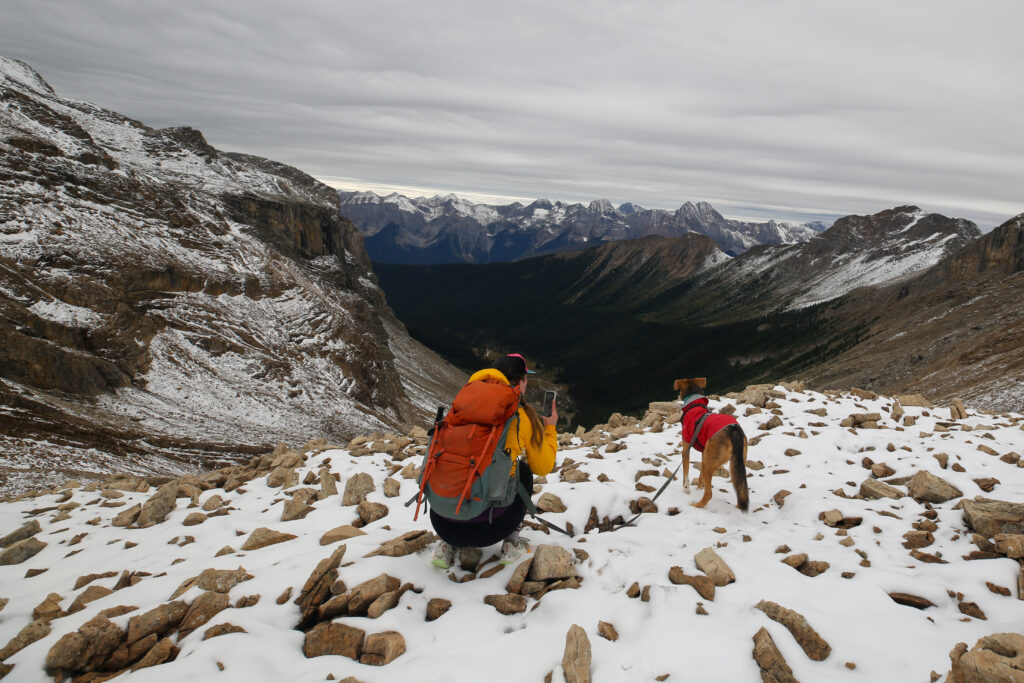
Hiking through snow and ice to an alpine winter wonderland.
I would like to acknowledge that this hike past through the ancestral and traditional territories of Indigenous Peoples. The Blackfoot Confederacy, Tsuut’ina, Stoney (Ĩyãħé) Nakoda, Cree, Ktunaxa, and Métis who have called the Rocky Mountains home since time immemorial. I acknowledge the many Indigenous Peoples in Canada whose footsteps have marked these lands for generations and I am grateful to be a visitor in these lands.
September 21 – 22, 2024.
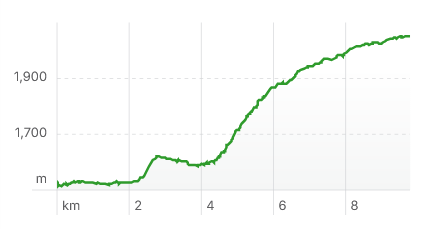
Day 1 Morning Takakkaw Falls Parking Lot to Little Yoho CG, 9.8 km, 560 m elevation gain, 30 m elevation loss, 3 hrs.
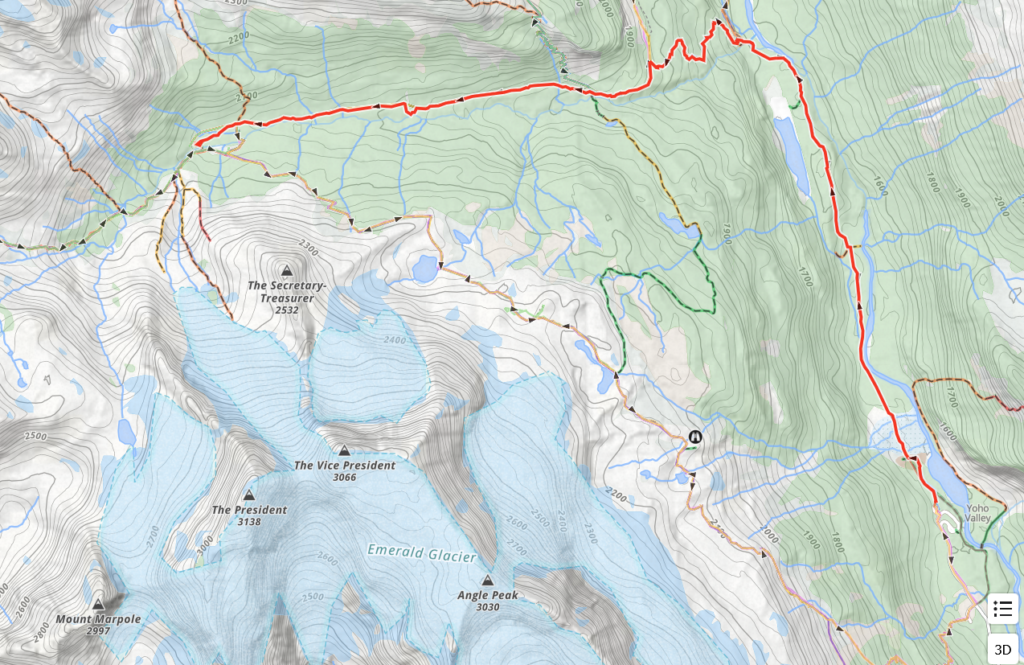
Laura was away enjoying a ladies weekend leaving me with a free weekend. Siobhan was available so I booked a last minute trip to Yoho NP. Primarily this hike would be our annual father/daughter hike but I had a secondary goal of revisiting Kiwetinok Pass. Kiwetinok Pass is on the western edge of Yoho NP above Little Yoho Campground. I hiked over Kiwetinok Pass once before back in August 2022 when I hiked Section D of the Great Divide Trail. This trip would be a great opportunity to revisit the pass and share the experience with Siobhan.
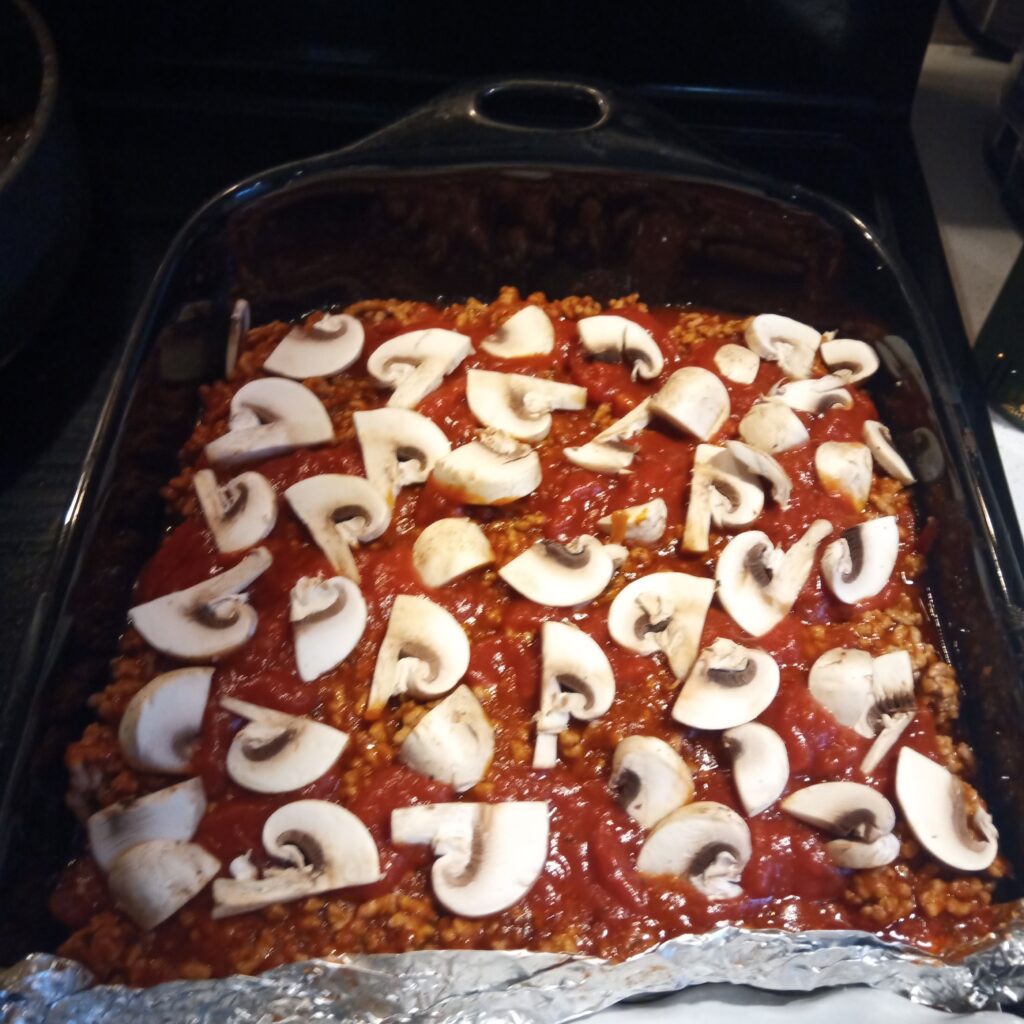
Since this was always going to be a short trip I decided not to dry the cannelloni and have it fresh for dinner. It was a little heavier and while I love my rehydrated cannelloni on trail you just cannot beat fresh food.
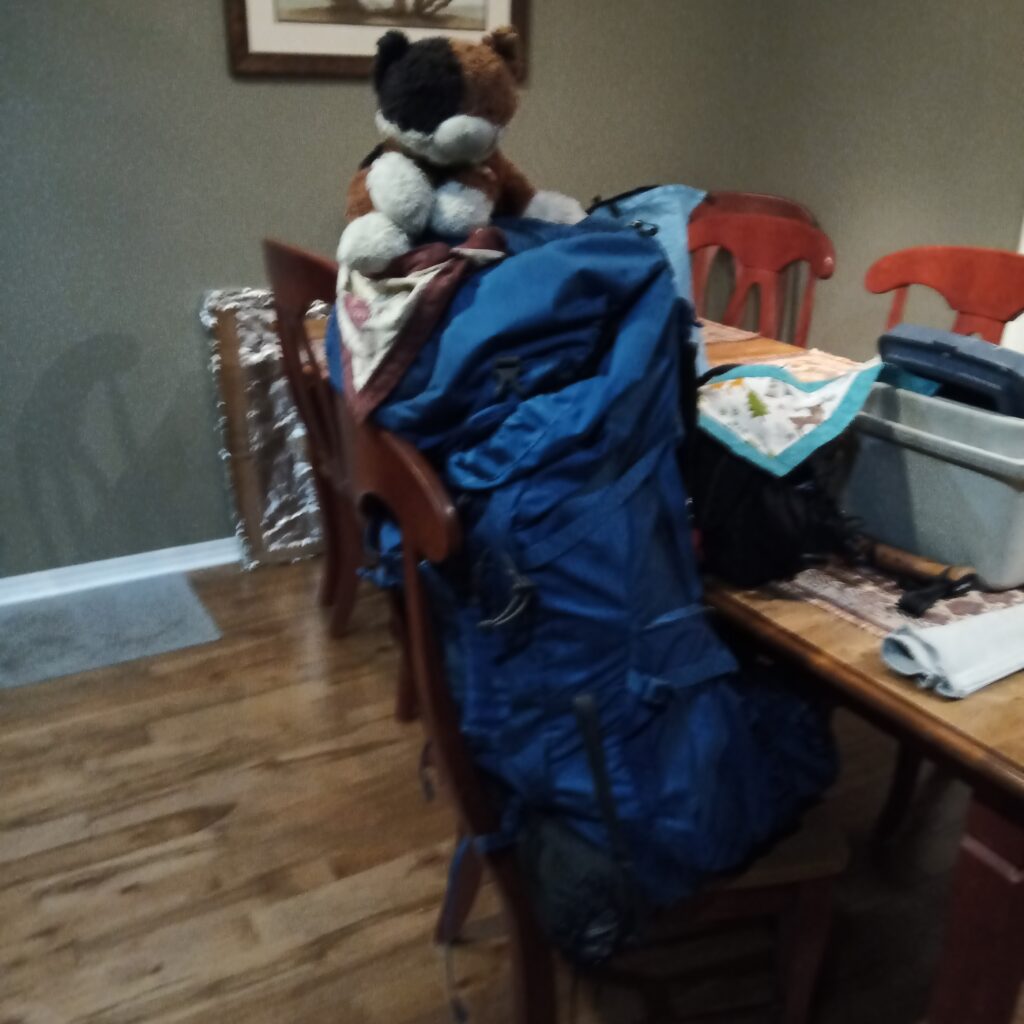
The trip was originally booked as a three day two night trip leaving Friday right after school. Day 1 was to be a short 4 km hike to Laughing Falls CG. The weather forecast called for snow and sub zero temperatures on Friday evening so Siobhan made the call to skip the short hike on Friday and have a big day on Saturday.
First deep dive of the trip. The name of the signature falls in Yoho NP is Takakkaw Falls. Online in Wikipedia the word is said to be of Cree origin with the meaning “it is magnificent”. The university of Alberta in Edmonton has a project, AltLabs, that developed a Cree online dictionary, itwêwina. The dictionary has definitions for both yoho, “oh!” and kiwetinok, “northward or towards the north”, but has no entry for takakkaw.
In Wikipedia the source for the definition of takakkaw is an 1874 French-Cree dictionary by Albert Lacombe, https://archive.org/details/dictionnairedela01laco/page/604/mode/1up?q=Takakkaw,. Albert Lacombe was a of French descent and there is no source for the word takakkaw. So I am questioning if takakkaw is actually a Cree word. I have reached out to AltLabs at the University of Alberta but after three weeks I have had no response. I found a National Research Council of Canada web page the Intelligent Plains Cree dictionary, which lists the AltLabs project, and emailed the contact at the National Research Council listed on the page. I will update this entry if any new information comes to light.
Update #1: I did get a reply back from the head of software development for AltLabs. His specialty was not the dictionary specifically but did say takakkaw was not included in the online version because it was not in the original sources they used. They have a copy of Albert Lacombe’s dictionary but it has not be verified yet. He went on to say that the head of the linguistics was away for the next month and if I did not hear back by then to email him back. Promising.
Update #2: I received a response back from the researcher at the National Research Council, Patrick Littell and he feels, not quite 100% that takakkaw is legitimate Cree word. From his email:
“That appears to be genuine Cree and I think it does mean “It’s beautiful” like Lacombe says. I think it’s just that the spelling has changed since then, and it’s in a particular conjugated form. (Every Cree verb has thousands of possible conjugations depending on who it’s describing and how it’s done; you can often fit a whole sentence of meaning in a single conjugated verb. So that’s why you can’t always look them up in the dictionary; any dictionary will only ever be able to list a fraction of the possible valid Cree words.) I looked in the online dictionary and found the root, it’s takahki- (good, beautiful) – you can see what was spelled “kk” then is spelled “hk” now. Then the ending of the verb depends on various factors; I think this is one of the 3rd person inanimate intransitive endings, but I’m not sure. (I’m not an expert, I know a bit about Cree, but I don’t speak it myself. But I’m pretty sure this is a genuine Cree word, I’m just not 100% sure about the details of its construction.)”
One thing that does bother me from my research is that while Yoho National Park and various features within the park have indigenous names, the Cree people never visited the area. I feel that the names should come from the local peoples.
Back to the hike.
We left decently early Saturday just after 7:30 am and were on trail at Takakkaw Falls at 8:55 am.
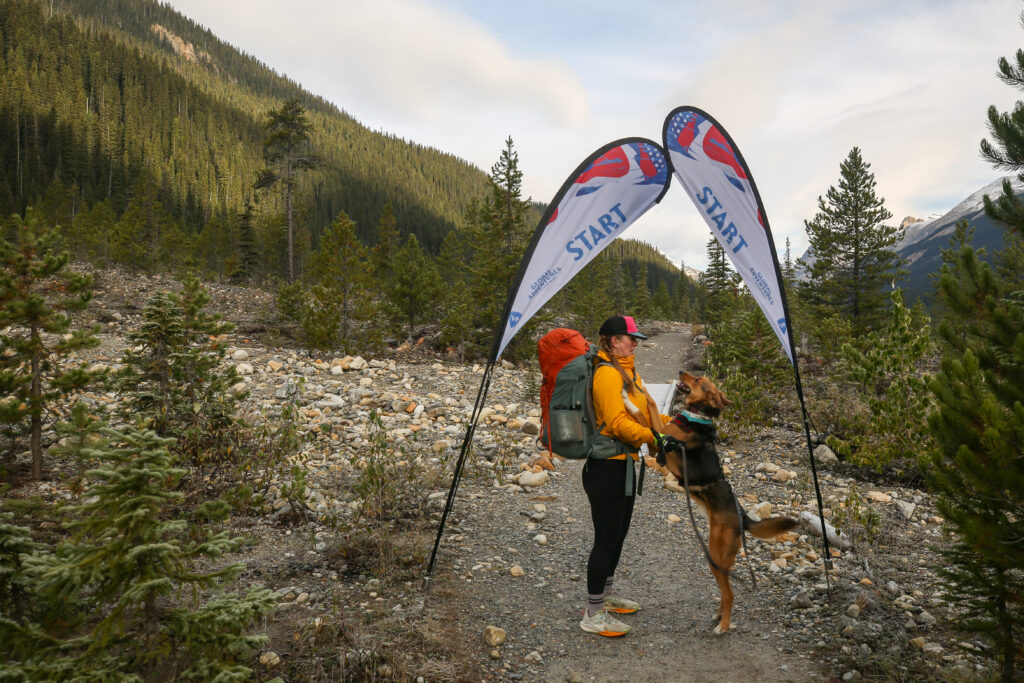
The starting flags were surprisingly not for us. The flags were for a private running race for people on an adventure vacation. We talked to a few of the runners and they said that the race was part of a week long vacation package that included other events such as mountain biking and the via ferratta in Banff. I think there were 20 to 30 people in the group. I do not think I will be signing up anytime soon but everyone involved looked liked they were having a good time.
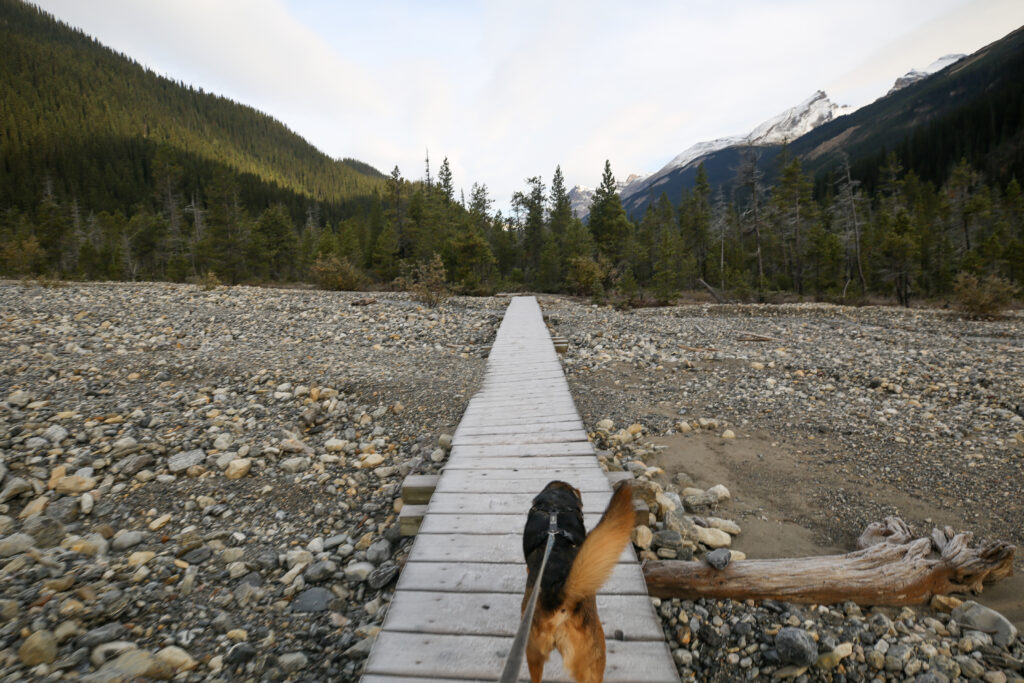
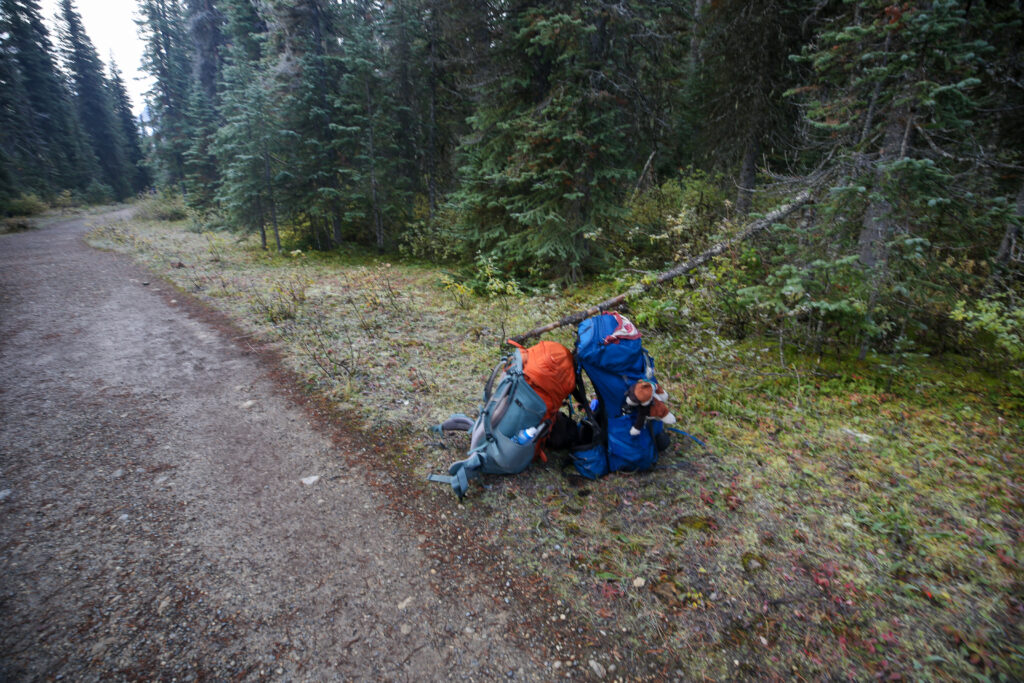
We were making good progress down the trail when Siobhan suddenly realized that she forgot her Garmin GPS back at the car. We had a small debate about whether she should go back and get it. For one thing I had a two way GPS device and we had a pretty simple route. Siobhan decided she wanted her device and we we only about 15 minutes down the trail so she dropped her pack and ran back to the car. With some time to kill I dropped my pack and wandered around with Margaux and took some photos of the Yoho River.
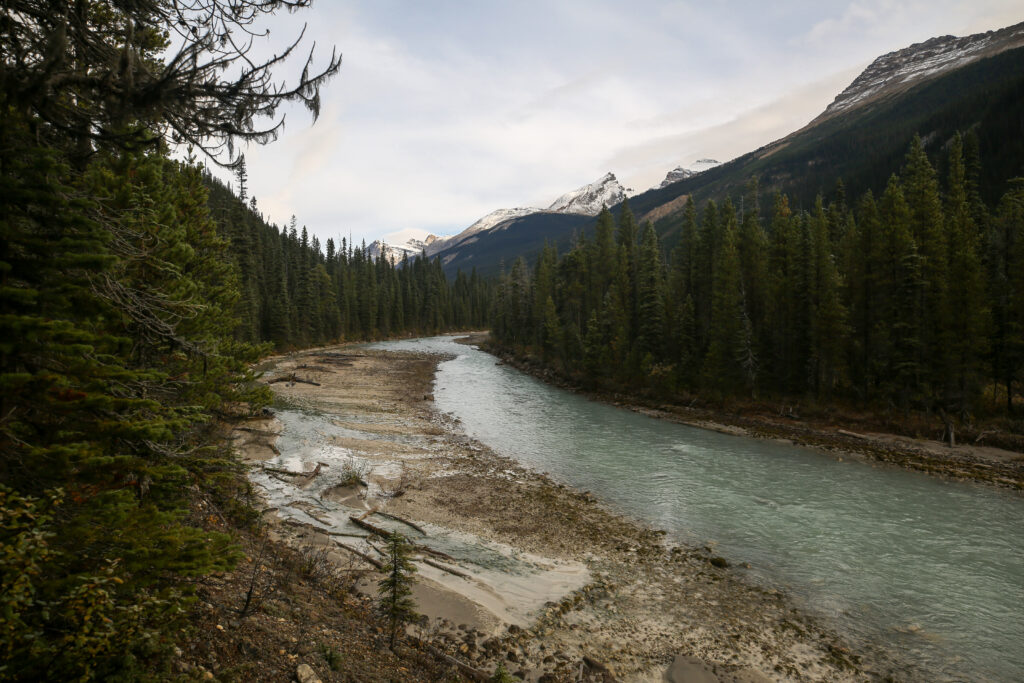
The delay in our hike was not tragic. It took Siobhan about 25 minutes to get to the car and back. We were back on our way at 9:40 am.
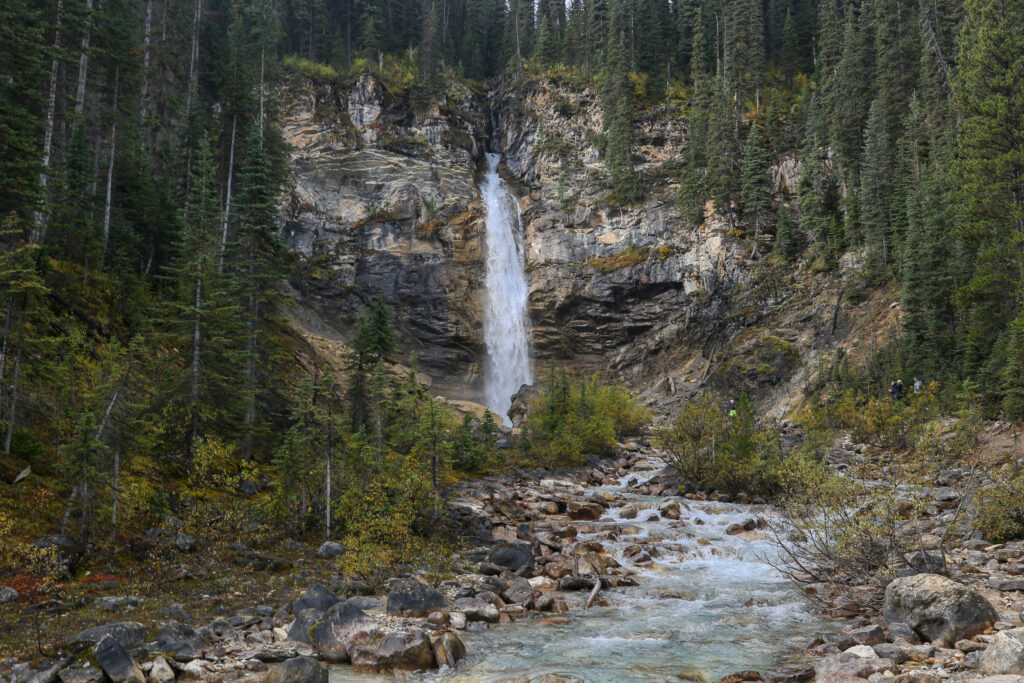
We arrived at Laughing Falls at 10:25 am. It had taken us 1 hr 30 min. In the past Margaux and I have done the same stretch in just under an hour. We had all been to Laughing Falls on numerous trips and it was not one of the objectives on this trip so we gave it a cursory look from the trail and kept moving.
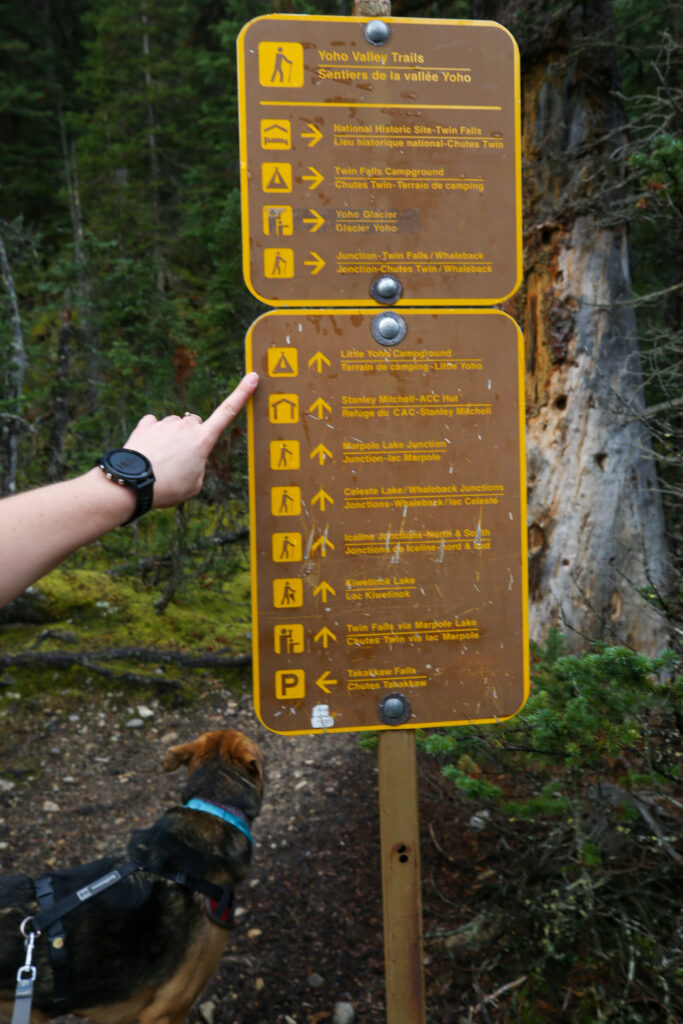
Once we left Laughing Falls the trail started to gain elevation in earnest. The trail never gets very steep but it is a good workout as we gained around 300m of elevation over the next couple of kilometres.
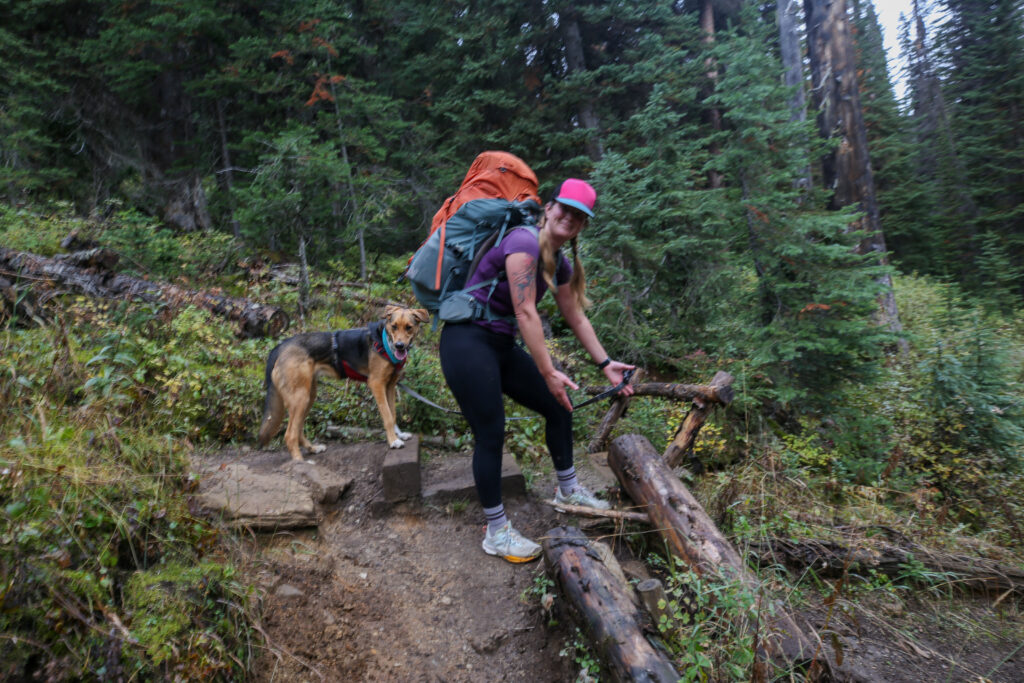
Some time around Laughing Falls Siobhan stole Margaux from me. Margaux is a hard charger when hiking and I was keenly aware of the lack of Margaux Power on the uphill.
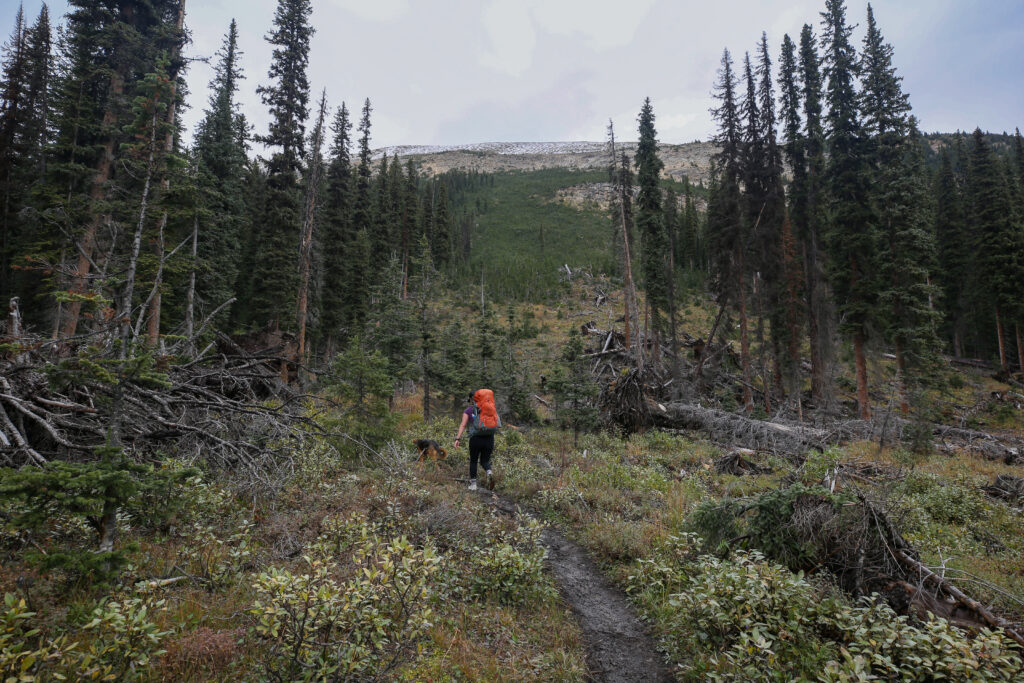
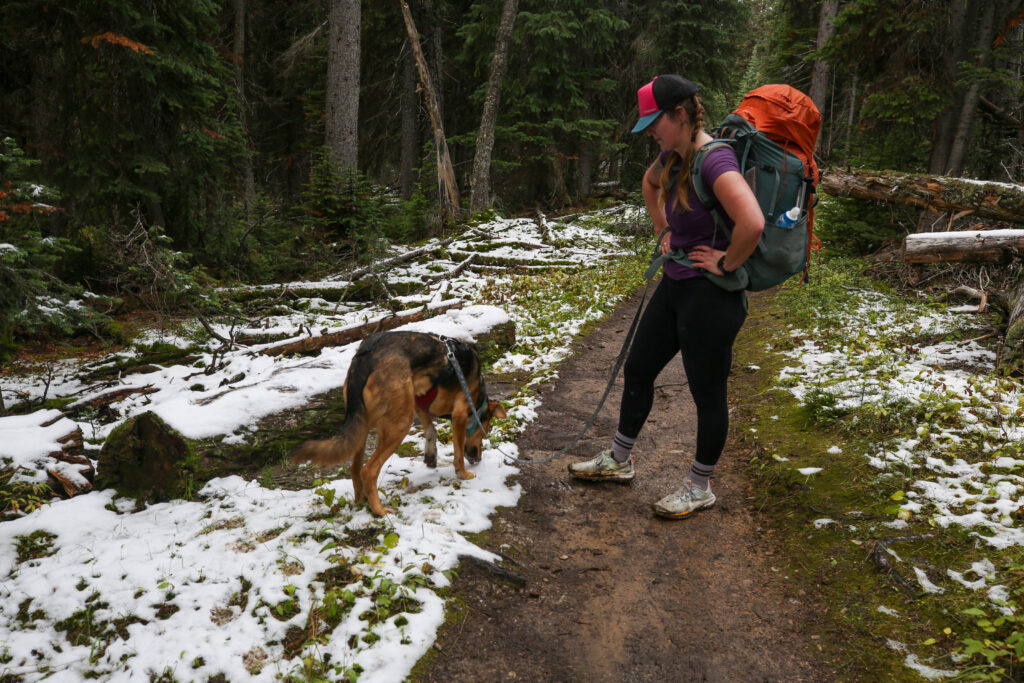
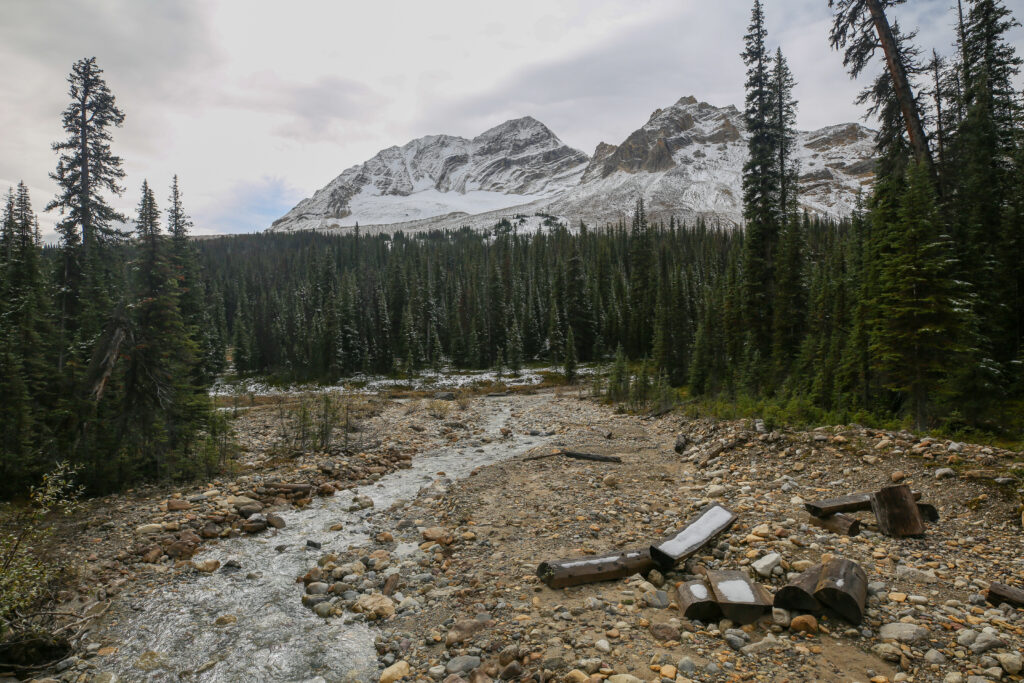
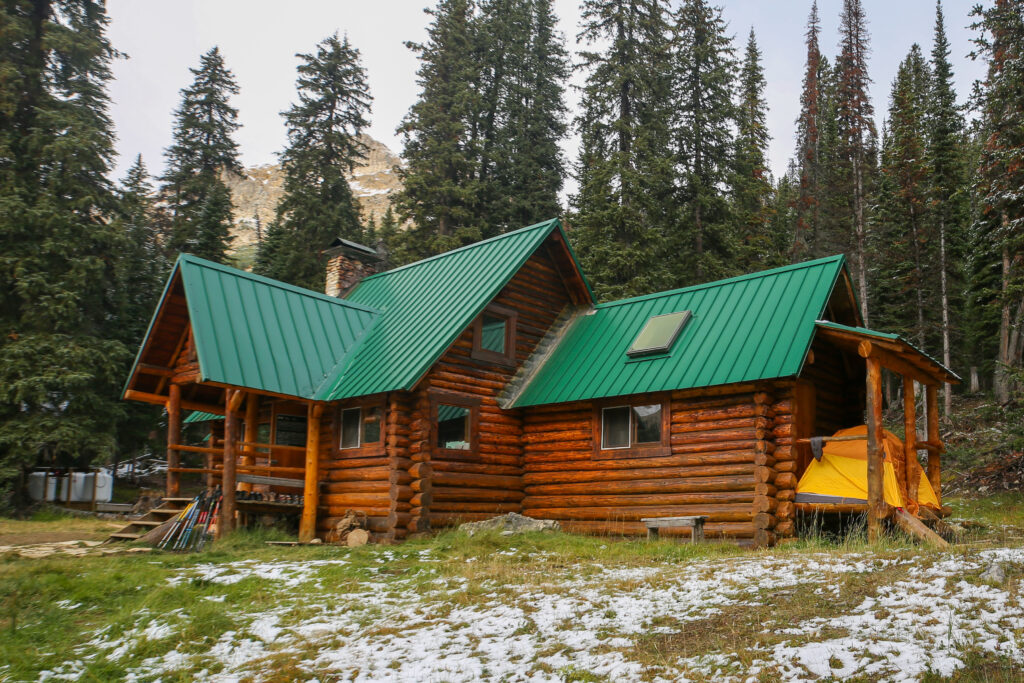
We arrived at the Stanley Mitchell Hut just before noon. It had taken us just 1hr 30 min to hike the 5.5 km from Laughing Falls CG while gaining 450 m of elevation. The hike up the trail had been pretty straightforward. No animal or people encounters. Since we had both hiked this trail numerous times in the past we know that passing the hut signaled just a couple of more minutes to the campground. As we passed by the hut some kids inside waved at us through the windows.
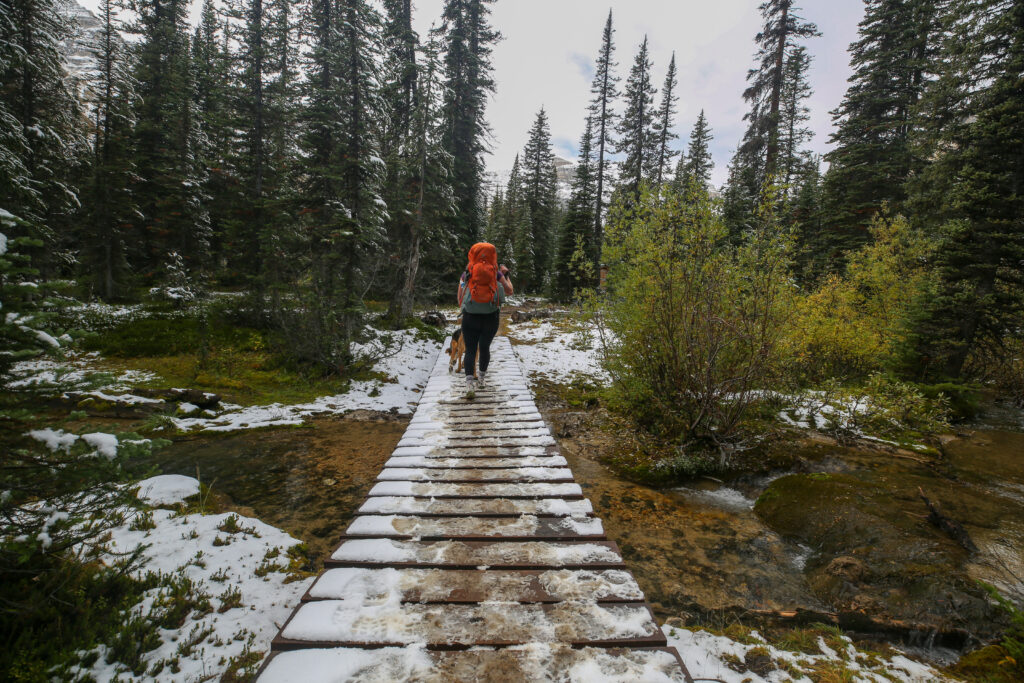
As we entered the campground there were a group of teenagers setting up a tent while some adults stood around. They were all part of an outdoor ed trip from a school and the students were demonstrating their ability to pitch a tent. The students and the adults were all staying at the Stanley Mitchell Hut. We would run into them on numerous occasions over the next couple of days.
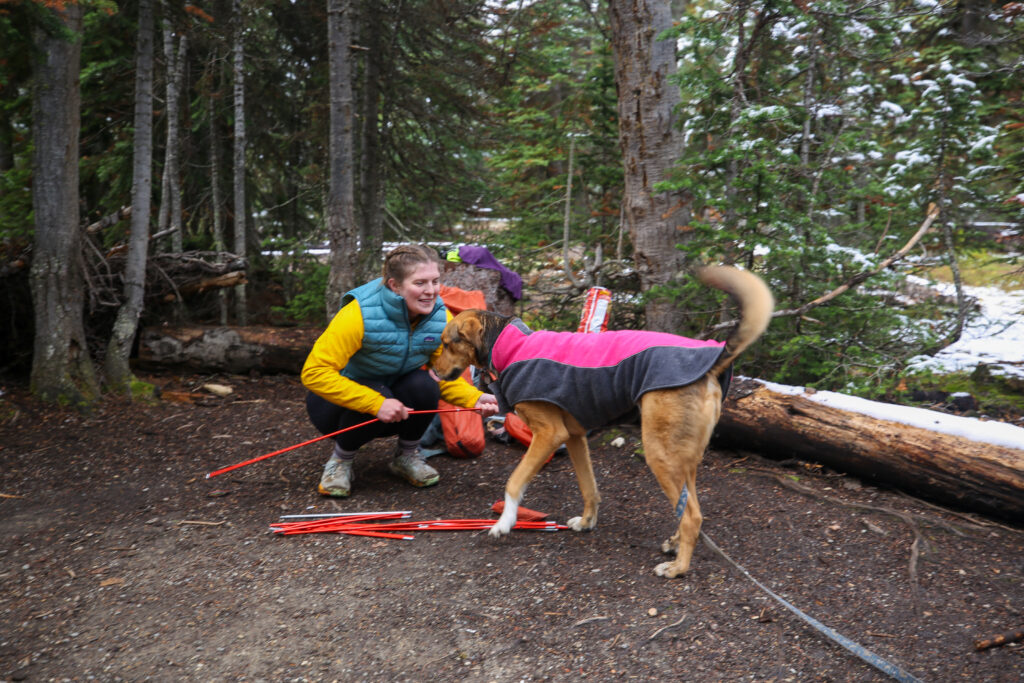
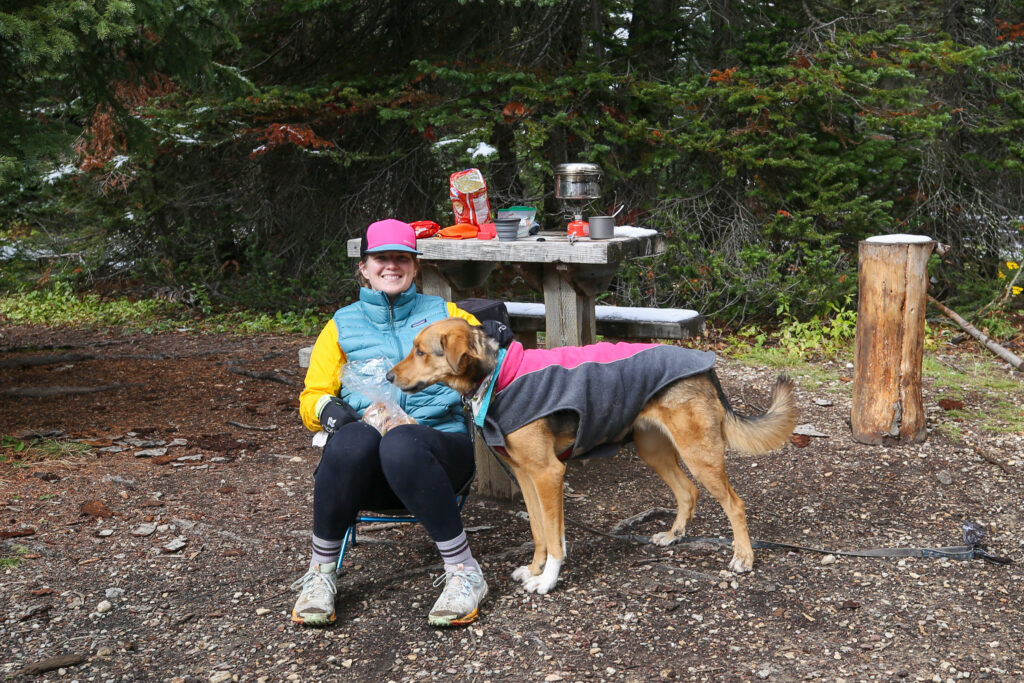
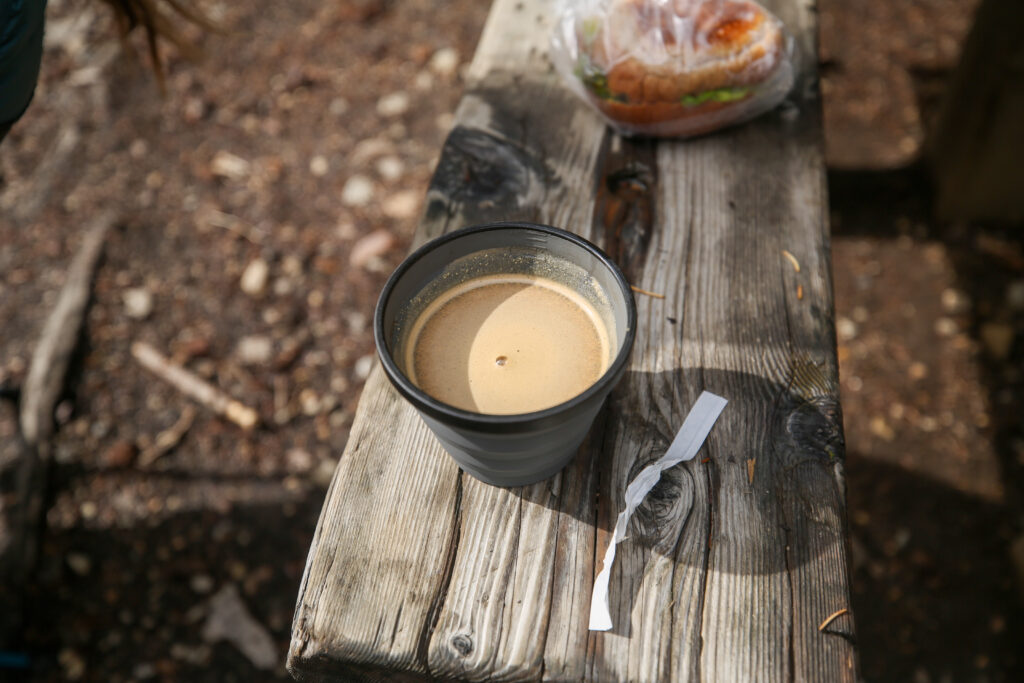
We finished lunch around 1 pm. We then got ready for the second part of our day a quick out and back to Kiwetinok Pass.